


Nach zwei Wochen ohne Spielen hatte ich Angst, alles verlernt zu haben. Doch meine ersten Motive kamen innerhalb weniger Minuten zurück.



Quick guide
More notes, more melodies, no harder to play.
Which scale suits you?
30-day returns and a 2-year warranty
Personalised adviceWe reply within 24 hours Protective case
£111
Free
 Mallets
£18
Free
 Rim protector
£60
Free
 Handpan stand
£94
Free
Accessories worth £283 included!
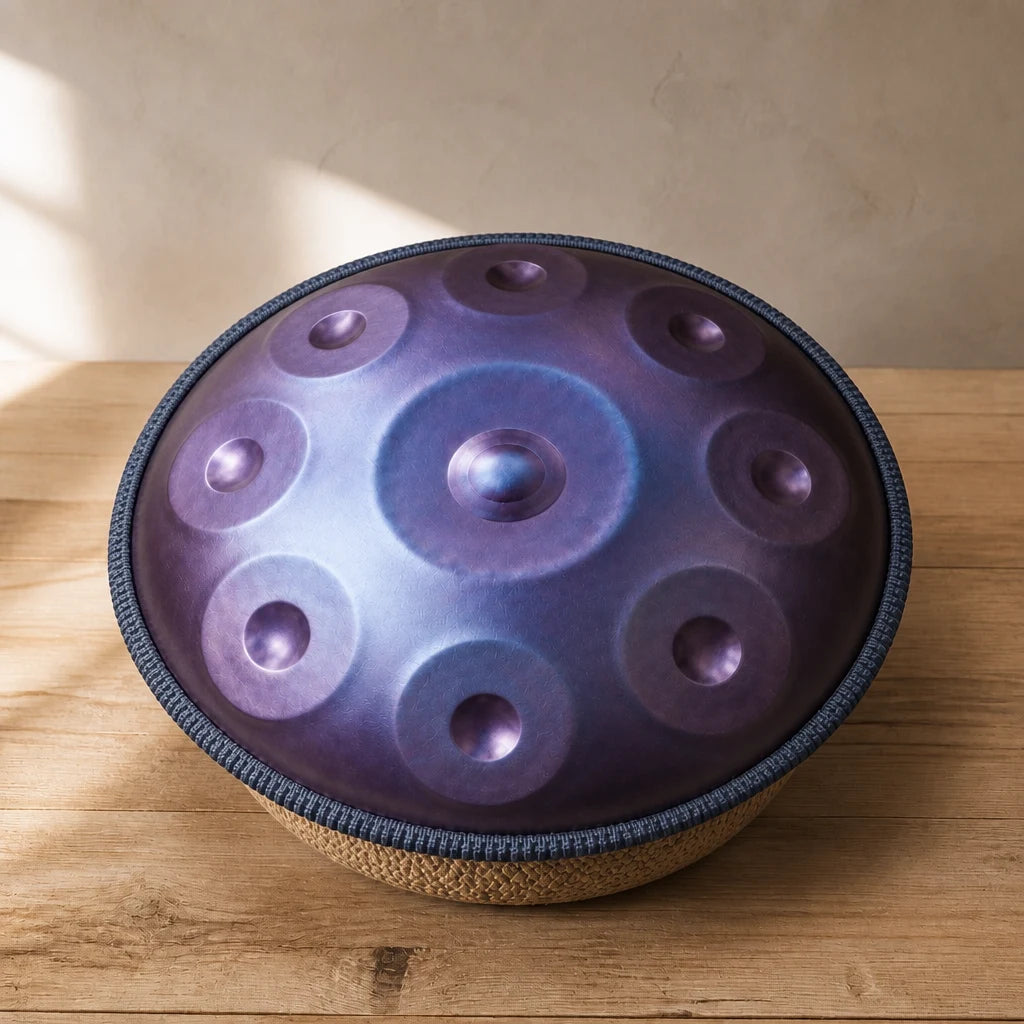
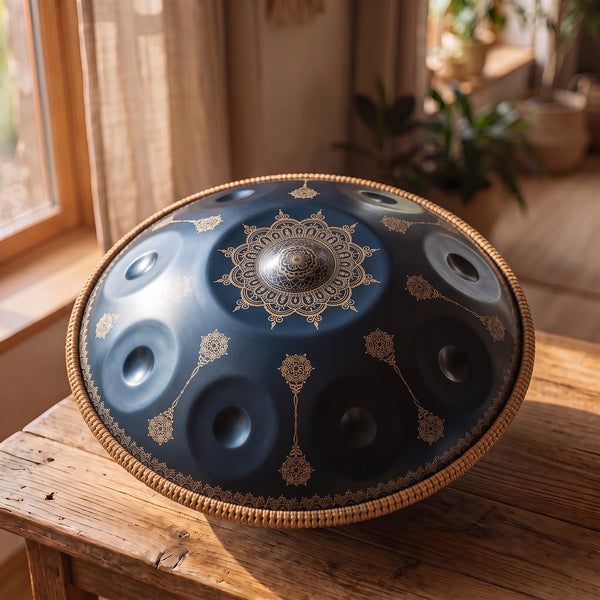
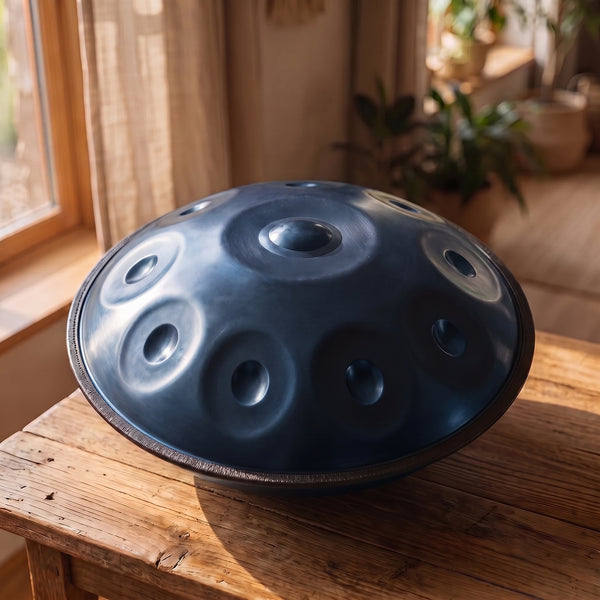
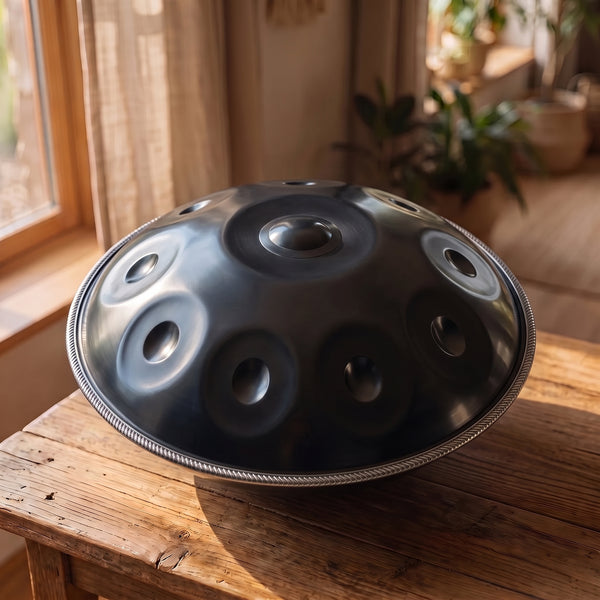
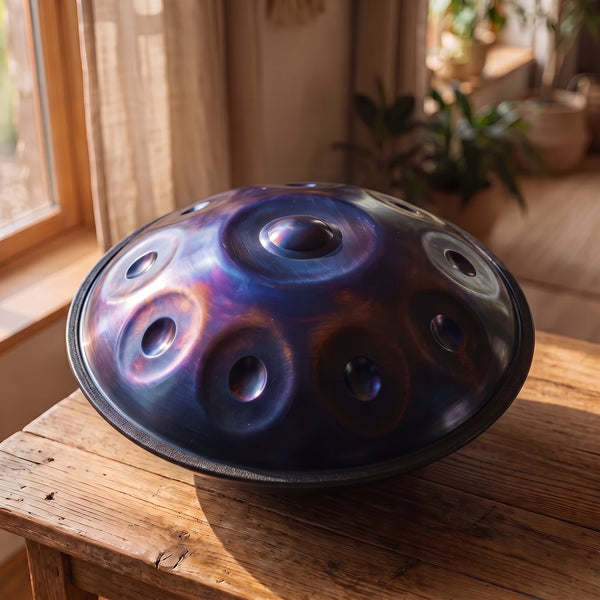
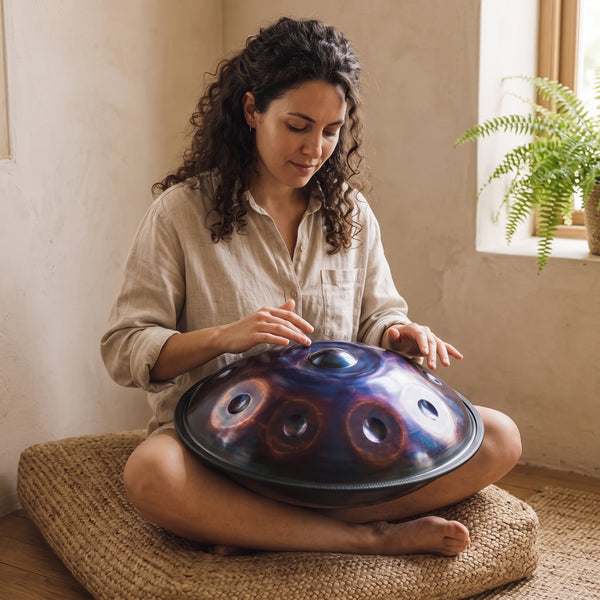
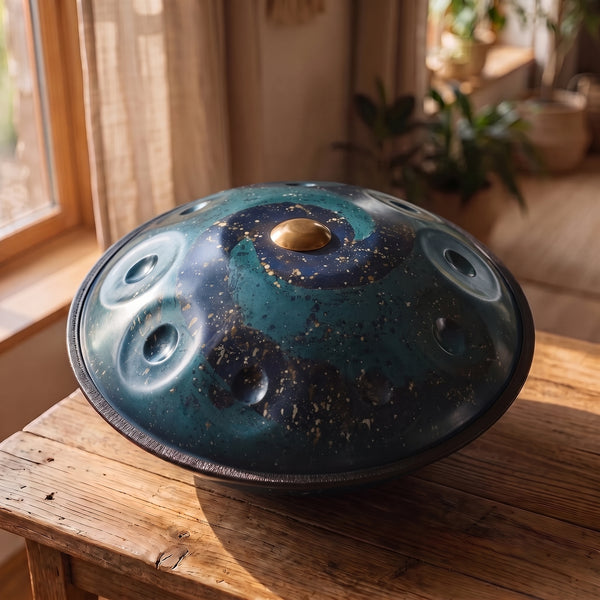
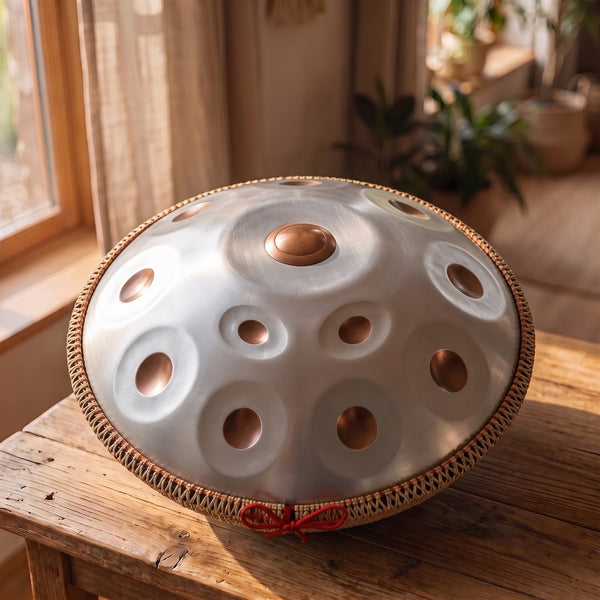
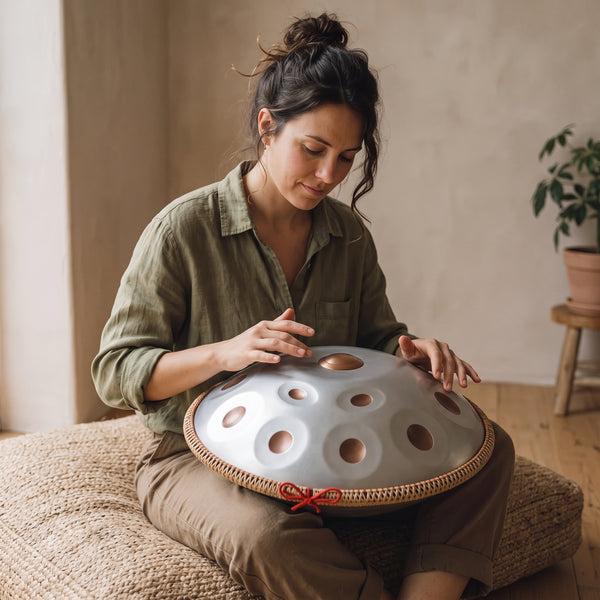
At 22 inches, this is one of the largest instruments in our lineup and the most customizable in its price range: two scales, three note counts, four colors, and two concert pitches. Every tone field is tuned by hand.
Kurd is the most played handpan scale in the world: warm, meditative, and instantly approachable. Amara Celtic sounds more open and airy, and it invites more improvisation. Both are in D minor, and neither has any wrong notes. See all Kurd models in our Kurd handpans collection.
9 notes are the usual starting point and enough for complete melodies. 10 notes give you more freedom. 12 notes are worth it if you already know you'll stick with it and don't want to upgrade in a year.
All four coatings protect the steel from corrosion and won't flake off. The color makes no difference to the sound.
A larger shell holds more air under the tone fields. That gives the base tone a stronger foundation and lets the sound ring out longer. It's why the low notes on this model sound fuller than on a compact instrument.
It's for anyone who wants their first handpan to be a full-fledged instrument from day one, and for players who'd rather pick the scale, number of notes, and color themselves than choose a ready-made model. See every model in our full handpan collection.
All accessories included at no extra cost. Unbox it and start playing right away.
Handmade: small variations in size, color, and finish are possible. They're a sign of genuine craftsmanship.
Every instrument is retuned by hand and individually sound-checked before shipping. Insured shipping with tracking. 30-day returns. Questions about which one to choose? You can reach us before and after you buy.
Choose the scale that moves you when you listen, not the one that looks best on paper. Minor tunings usually feel warm and introspective, while major tunings feel more open and bright. Take your time listening to the sound sample of the model you like. If you plan to play with other instruments, 440 Hz is the easiest choice.
Yes. A handpan's notes are tuned so that any sequence of notes sounds harmonious. You don't need sheet music or lessons. Start with a few notes and simple rhythms. The short guide next to the note options shows you how many notes are right for you.
 Handpan Kurd or Amara D Minor 9-12 Notes
£894
As featured in


Every handpan is hand-hammered, tuned by ear one note at a time and sound-checked before it ships. As a Swiss company, we stand for care and reliability, and you can hear it from the very first note.
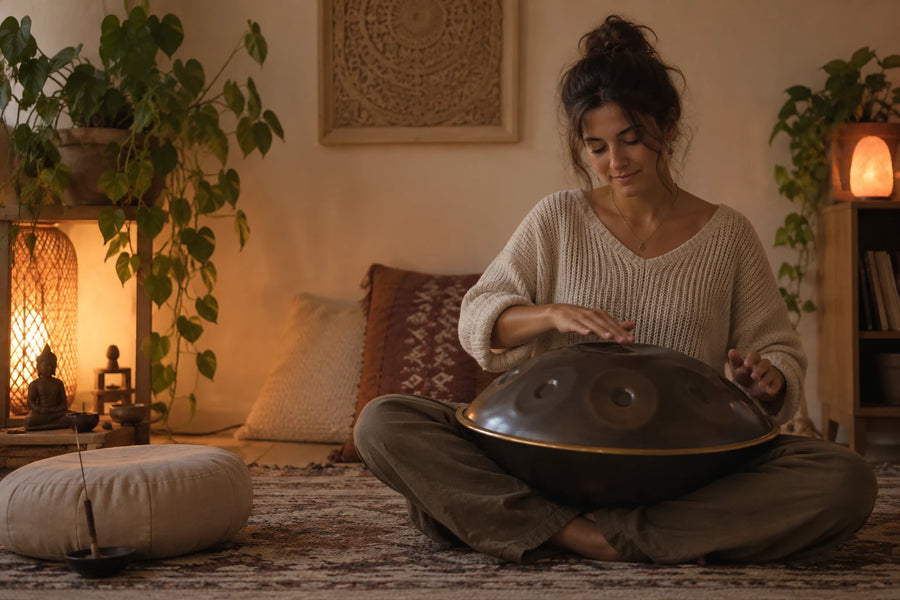
There are no wrong notes on a handpan, and you don't need sheet music or any experience. One note, and your racing thoughts begin to slow.
Overall rating: 4.6 / 5 from 34 reviews.
Nach zwei Wochen ohne Spielen hatte ich Angst, alles verlernt zu haben. Doch meine ersten Motive kamen innerhalb weniger Minuten zurück.

Bei 432 Hz empfinde ich mein Spiel in ruhigen Momenten als besonders beruhigend. Vor dem Schlafengehen nutze ich es oft, um zur Ruhe zu kommen.

Ausgehend von drei Noten schrieb ich meine erste kleine Komposition. Anfangs drehte ich mich im Kreis. Dann löste ein Rhythmuswechsel die Blockade. Am nächsten Tag konnte ich das Stück wieder spielen, ohne es notiert zu haben. Dass ich es mir so leicht merken konnte, motiviert mich enorm.

Mein Nachbar, der selbst Musiker ist, kam vorbei, um sich eine Improvisation anzuhören. Seine Hinweise halfen mir schon in der nächsten Session, leichter anzuschlagen.

Das dunkle Violett gefällt mir bei gedämpftem Licht noch besser.
Nur um meine Gewohnheiten zu verändern, probierte ich im Stehen zu spielen. Durch den neuen Blickwinkel wurden meine Bewegungen freier.
An einem Wintermorgen holte ich sie hervor, noch bevor ich Kaffee kochte. Meine Hände waren noch etwas kalt. Ich begann langsam, dann wurden die Bewegungen geschmeidiger. Das blaue Tageslicht schuf eine beinahe unwirkliche Atmosphäre. Diese Szene bleibt mir als ganz einfacher und kostbarer Moment in Erinnerung.
Ich fühle mich inspiriert.
Bei einem Workshop für Anfänger lieh ich das Instrument mehreren Personen. Alle fanden eine andere kleine Phrase. Es war spannend, Anschläge und Spielweisen zu hören, auf die ich selbst nicht gekommen wäre. Als ich die Handpan wieder übernahm, wirkte mein eigenes Spiel weniger festgefahren. Diese Erfahrung hat mir neue Wege eröffnet.
Die weiße Oberfläche fügt sich so gut in mein Zuhause ein, dass ich die Handpan offen stehen lasse.
Wenn ich ohne festen Rhythmus spielen möchte, lasse ich mich von den tiefen Noten tragen. Sie geben meinen Improvisationen ganz natürlich eine Richtung.
Jede Note bereitet mir Freude.
Zusammen mit einem Cajón muss ich kräftiger anschlagen, um mich zu behaupten. Diese Intensität liegt mir weniger als meine übliche Spielweise. Solo finde ich zum Glück zu all der Feinheit zurück, die ich so schätze.
Ich lese oft im selben Sessel. Eines Abends ersetzte ich mein Buch durch die Handpan. Eigentlich wollte ich nur ein Motiv ausprobieren, spielte dann aber viel länger. Der Übergang von der Stille zum Klang ergab sich ganz natürlich. Ich schätze es, jetzt zwei verschiedene Möglichkeiten zum Abschalten zu haben.
Eines Morgens brachte ein Stromausfall sämtliche Geräte in der Wohnung zum Schweigen. Diese ungewohnte Ruhe nutzte ich, um ein paar sehr langsame Phrasen zu spielen. Ohne Bildschirm oder Hintergrundmusik hörte ich meine Bewegungen mit ganz neuer Präzision. Ich blieb viel länger konzentriert als erwartet. Diese spontane Session hat meine Art zuzuhören verändert.
Meine ersten Wochen waren von unbeholfenen Anschlägen geprägt. Allmählich spiele ich gleichmäßiger, doch manche Tonfelder bleiben unter meinen Fingern schwieriger. Kurze Übungen machen mir trotzdem Freude.
In einem belebten Raum fehlt meinem Spiel schnell die nötige Präsenz. Allein und in ruhiger Umgebung nehme ich mehr Details wahr, und das Erlebnis ist in Ordnung.
Ich liebe mein dunkles Violett, auch wenn ich die Oberfläche oft abwischen muss, damit sie schön bleibt.
Mit meinen neun Noten gibt es noch viele Wege zu erkunden. Diese Vielfalt weckt in jeder Session aufs Neue meine Neugier.
Manchmal wähle ich eine Note nach dem Zufallsprinzip und lasse die Melodie um sie herum entstehen.
Ich bin recht zufrieden.
Für die Stücke, die ich im Kopf hatte, ist mir der Nachhall zu kurz. Auch nachdem ich meinen Anschlag angepasst habe, bin ich von der fehlenden Klangfülle enttäuscht.
Mit einer befreundeten Cellistin probierte ich einige langsame Akkorde aus. Unsere beiden Klangfarben antworteten einander sehr sanft.
Nach einem Transport bemerkte ich eine kleine Spur, die mir immer wieder ins Auge fällt. An meiner Art zu spielen ändert sie nichts. Wenn ich mir Zeit lasse, gefällt mir der Klang weiterhin. Ich hätte mir nur gewünscht, dass die Oberfläche länger makellos bleibt.
Ich wollte vor allem schnelle Rhythmen spielen. Doch sobald ich schneller werde, geht die Klarheit oft verloren. Dann kehre ich zu einfachen Motiven zurück, die besser klingen, mich aber schneller langweilen. Das Üben hilft ein wenig. Im Moment bin ich noch unentschlossen, wie viel Freude mir das Instrument tatsächlich bereitet.
Ich bin ganz verzaubert.
Den Sonntagmorgen reserviere ich für eine lange Improvisation, die mir unglaublich guttut.
Wenn ich sehr leise spiele, erfordern manche Anschläge mehr Präzision als erwartet. Dann muss ich die Passage mehrmals wiederholen. Sobald meine Hand lockerer wird, klingt es viel angenehmer. Diese Anforderung bringt mich voran, auch wenn sie die Spontaneität stören kann. Insgesamt fällt mein Fazit positiv aus.
Mit nur einem Mikrofon vor mir entstand eine sehr lebendige Aufnahme. Die Nuancen meines Spiels kommen gut zur Geltung.
Manchmal stimme ich meine Anschläge auf meine Atmung ab. Diese Übung bringt mich sehr schnell ins Hier und Jetzt zurück.
Einzelne Noten gefallen mir, doch meinen Übergängen fehlt noch die Natürlichkeit. Wenn ich bei langsamen Tempi bleibe, erlebe ich trotzdem schöne Sessions.
Ich habe meine Musikecke rund um diesen dunkelblauen Farbton gestaltet, den ich sehr mag.
Nach dem Abendessen spiele ich oft, ohne auch nur ein Motiv vorzubereiten. Fast immer höre ich mit einer Idee auf, auf die ich sonst nicht gekommen wäre.
In meinem hellen Wohnzimmer mag ich die dezente Präsenz der weißen Oberfläche.
 Bestseller−30%
 Bestseller−30%
 Bestseller−30%
 Bestseller−20%
 −30%
 Bestseller−25%

Customer service · Resonance