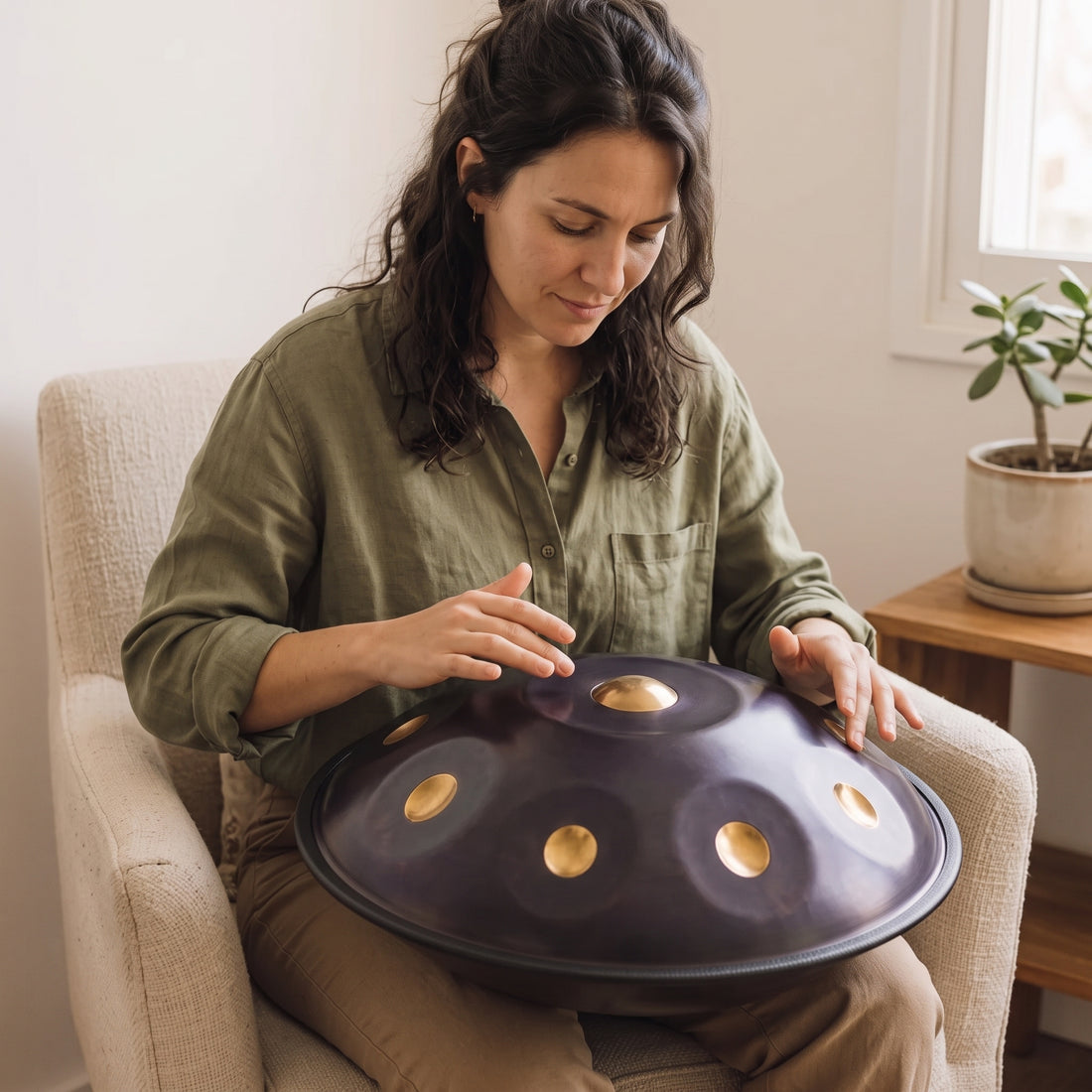


Ich spiele nach dem Aufwachen ein paar Minuten und starte mit mehr Schwung in den Tag.



Quick guide
More notes, more melodies, no harder to play.
Which scale suits you?
30-day returns and a 2-year warranty
Personalized adviceWe reply within 24 hours Protective case
129,99 €
Free
 Mallets
19,99 €
Free
 Rim protector
69,99 €
Free
 Handpan stand
78 €
Free
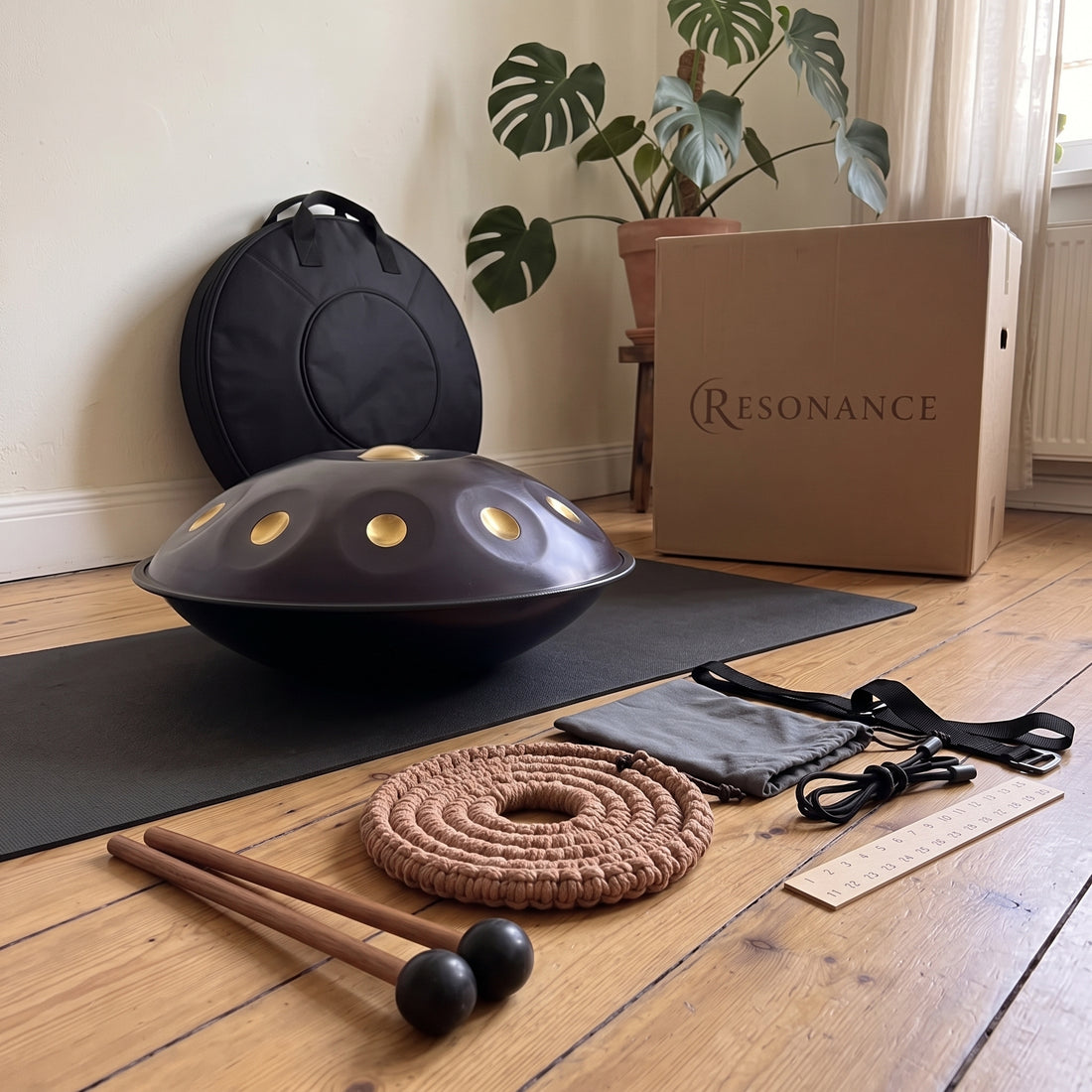
Accessories worth 297,97 € included!
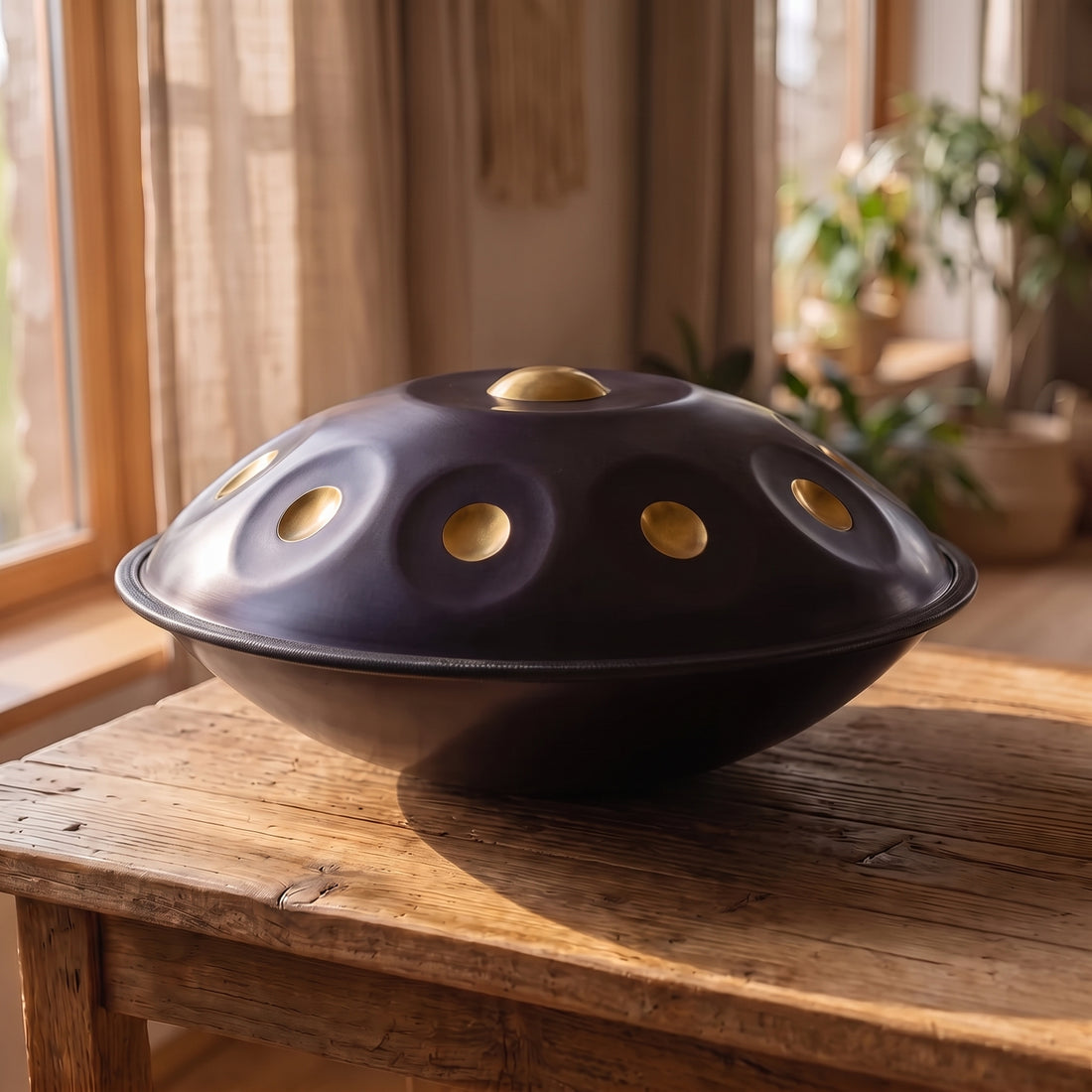
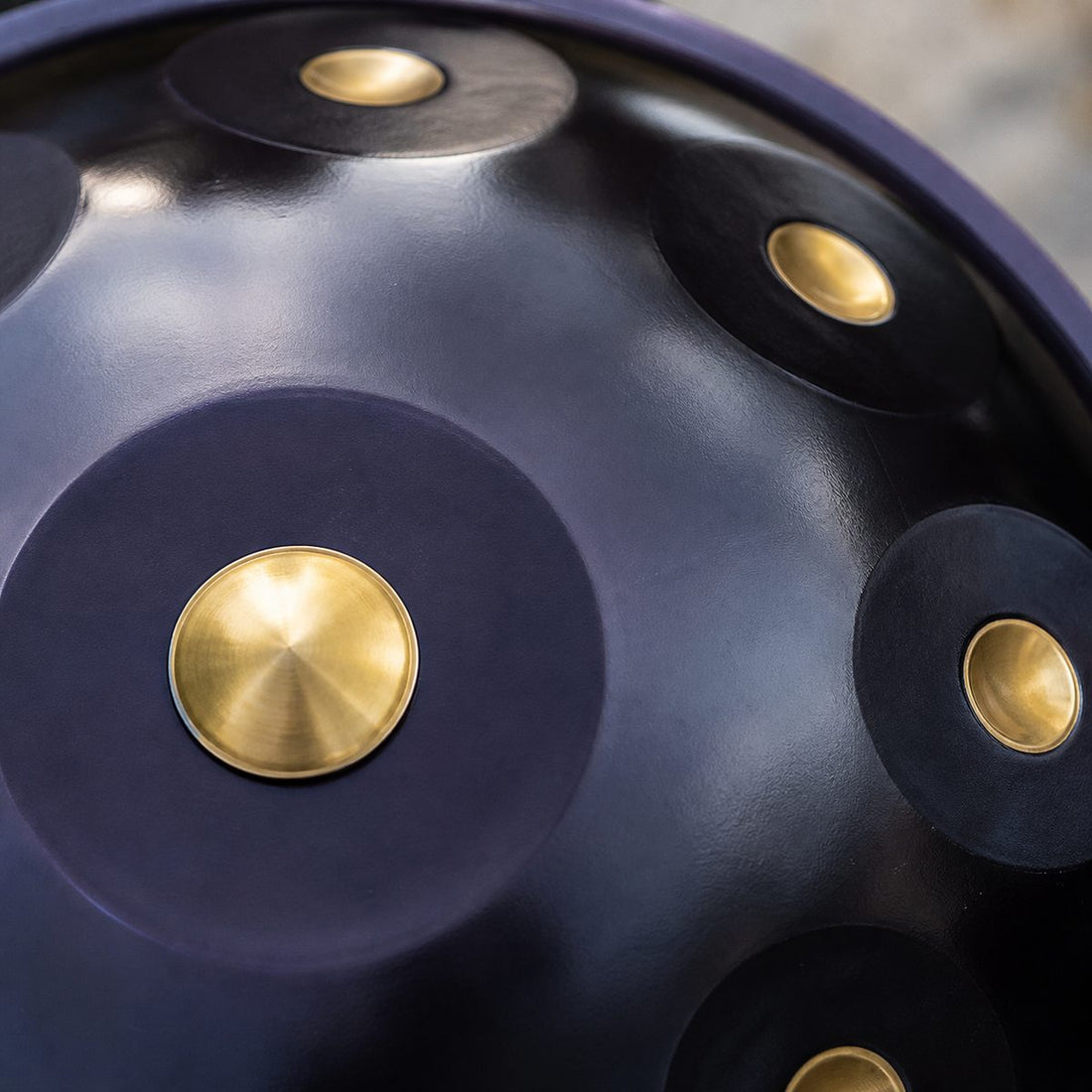
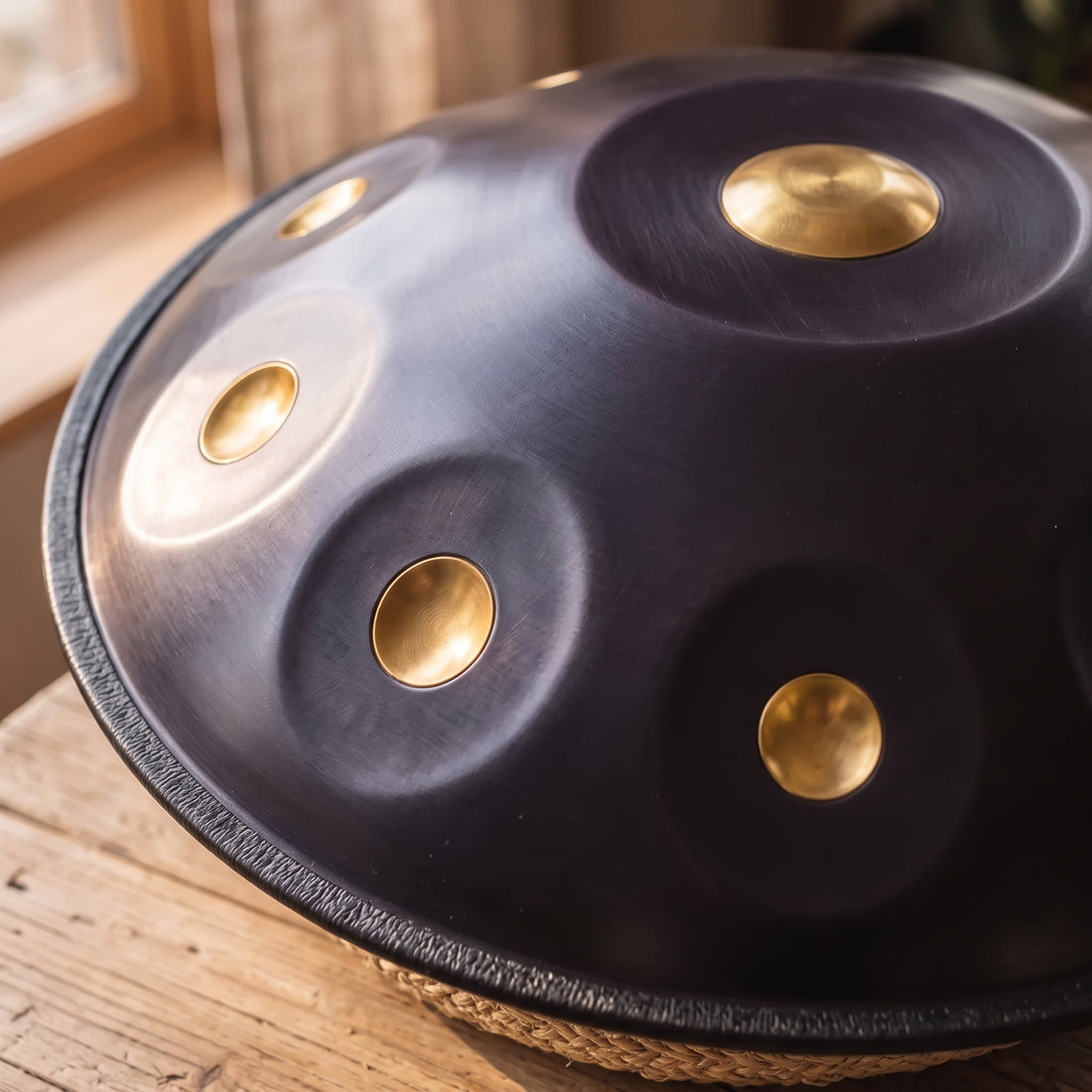
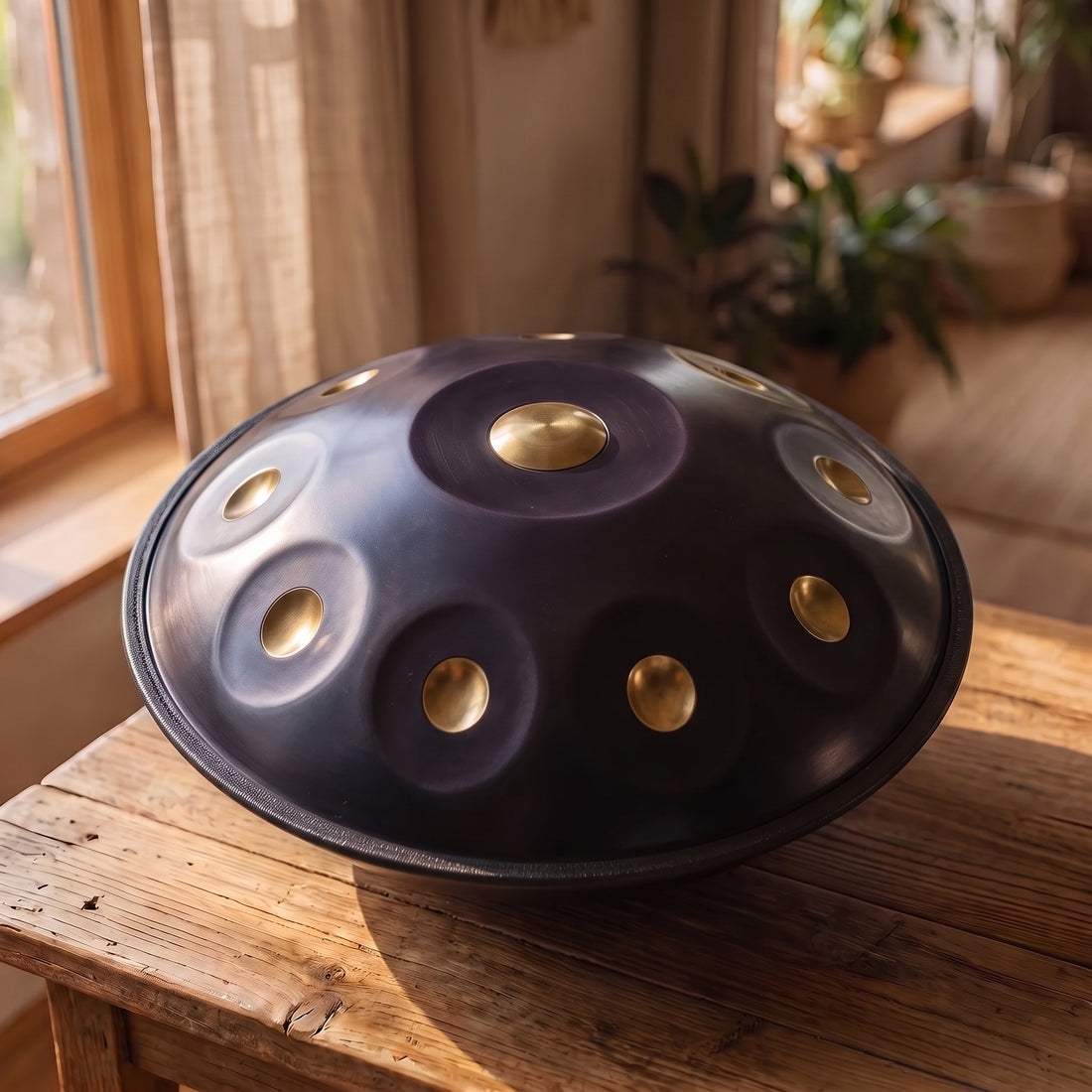
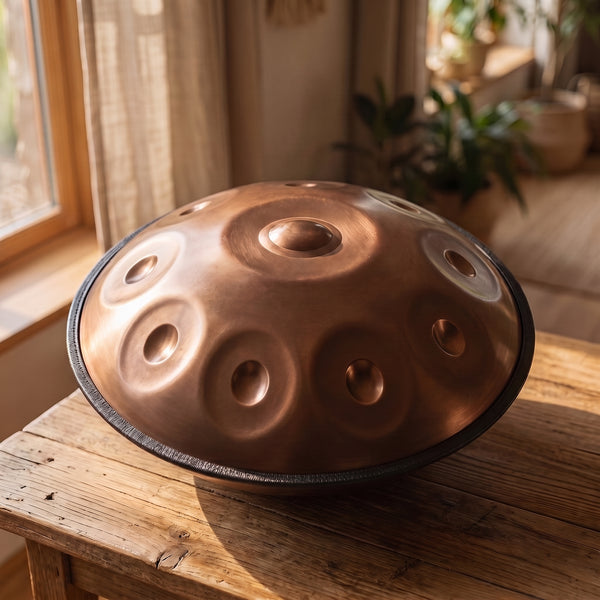
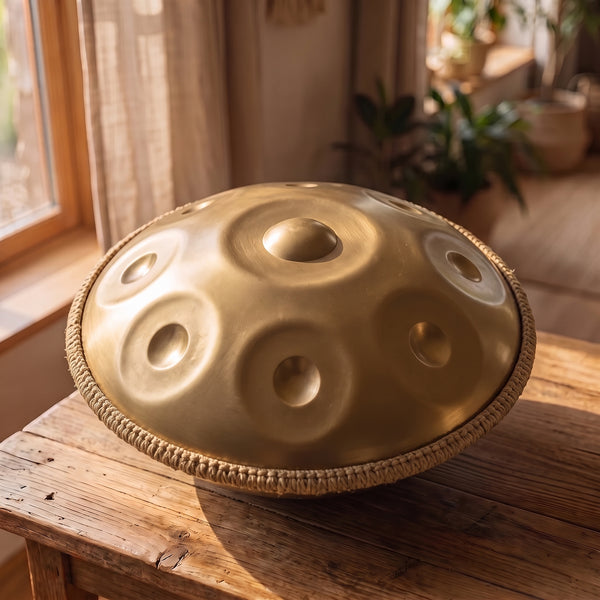
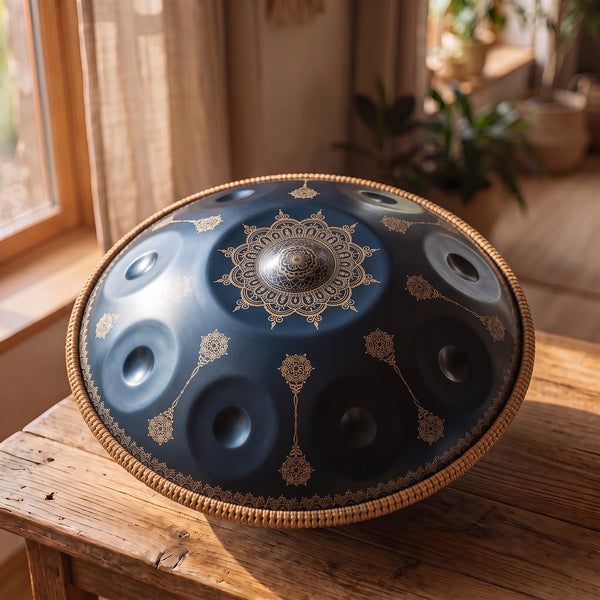
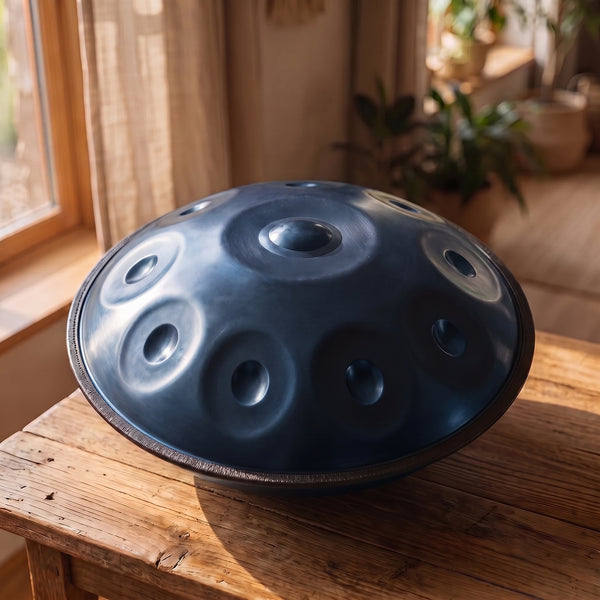
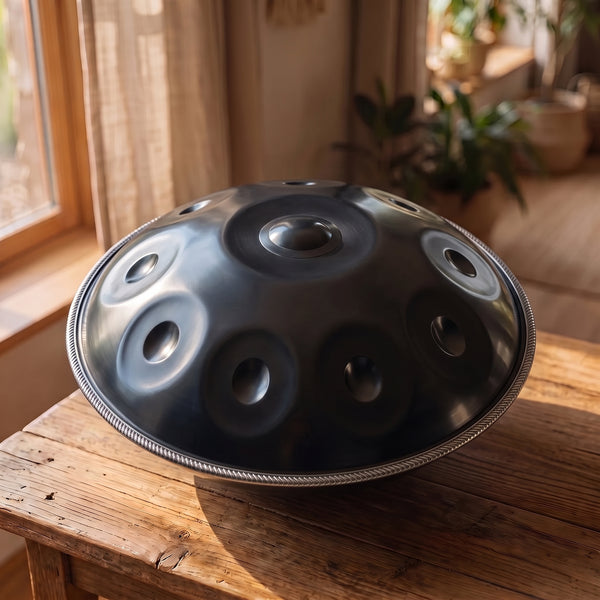
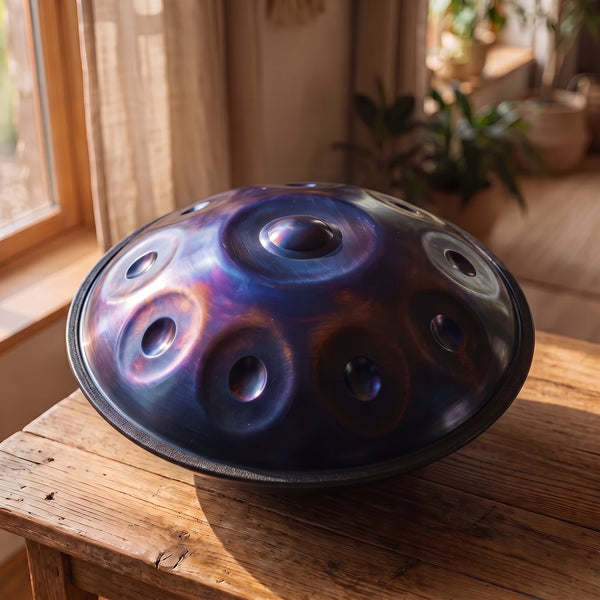
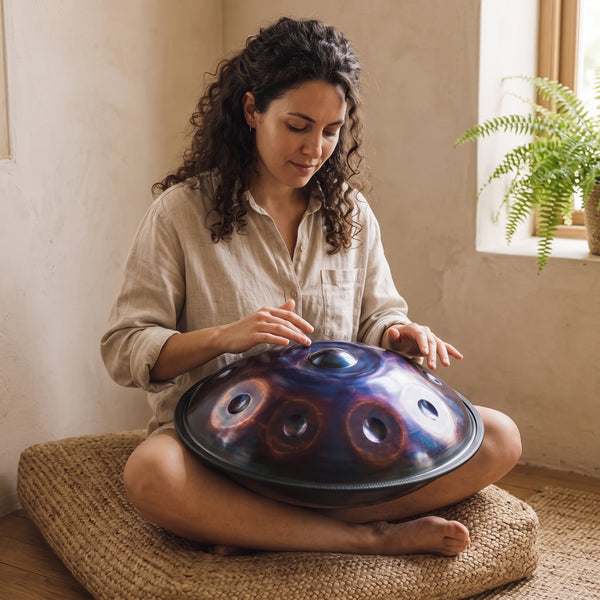
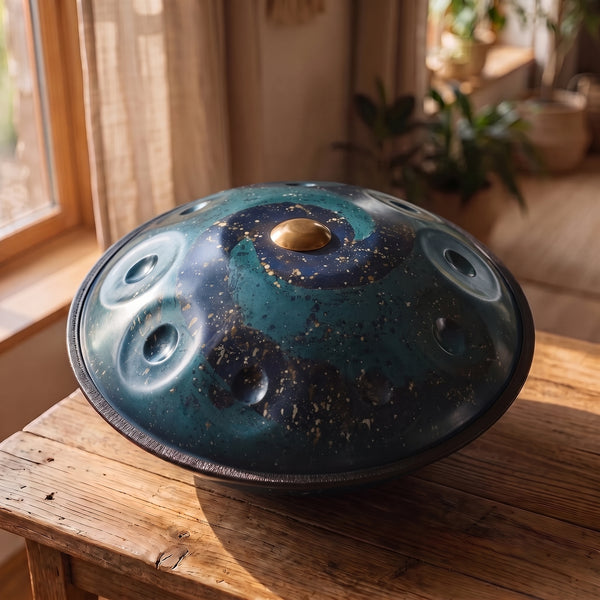
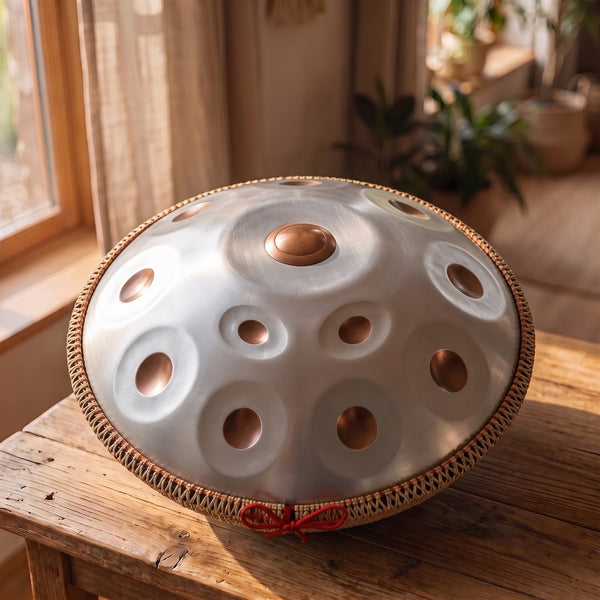
The King is the most customisable handpan in our range. You pick the scale (warm, meditative Kurd or airier Celtic, both in D minor), then 9, 10, or 12 notes, one of four colours, and 440 Hz or 432 Hz. It's made of high-quality steel, with every tone field tuned by hand, for players who want to put their own instrument together.
Kurd D minor is the most played handpan scale in the world: warm, meditative, and instantly melodic. Celtic D minor sounds airier, with wider intervals and a slightly melancholic character, closer to a folk tune. Both are in the same key, and neither has wrong notes. See all Kurd models in our Kurd handpans collection.
9 notes are the classic starting point and cover complete melodies. 10 notes noticeably open up your range. 12 notes are for advanced players who want to improvise and move between registers. Each extra tone field is shaped individually and tuned to match all the others.
It's for anyone who wants an instrument put together exactly the way they imagine it, instead of choosing from ready-made models. See every model in our full handpan collection.
That's €297.97 in accessories, included at no extra cost. Unbox it and start playing right away.
Handmade: small variations in size, colour, and finish are possible. They're a sign of genuine craftsmanship.
Before it ships, every instrument is fine-tuned by hand and sound-checked one by one. Insured delivery with tracking. 30-day returns. Questions about which one to choose? You can reach us before and after you buy.
Choose the scale that moves you when you listen, not the one that looks best on paper. Minor tunings usually feel warm and introspective, while major tunings feel more open and bright. Take your time listening to the sound sample of the model you like. If you plan to play with other instruments, 440 Hz is the easiest choice.
Yes. A handpan's notes are tuned so that any sequence of notes sounds harmonious. You don't need sheet music or lessons. Start with a few notes and simple rhythms. The short guide next to the note options shows you how many notes are right for you.
 Handpan King Kurd or Celtic D Minor 9-12 Notes
1.439 €
As featured in


Every handpan is hand-hammered, tuned by ear one note at a time and sound-checked before it ships. As a Swiss company, we stand for care and reliability, and you can hear it from the very first note.
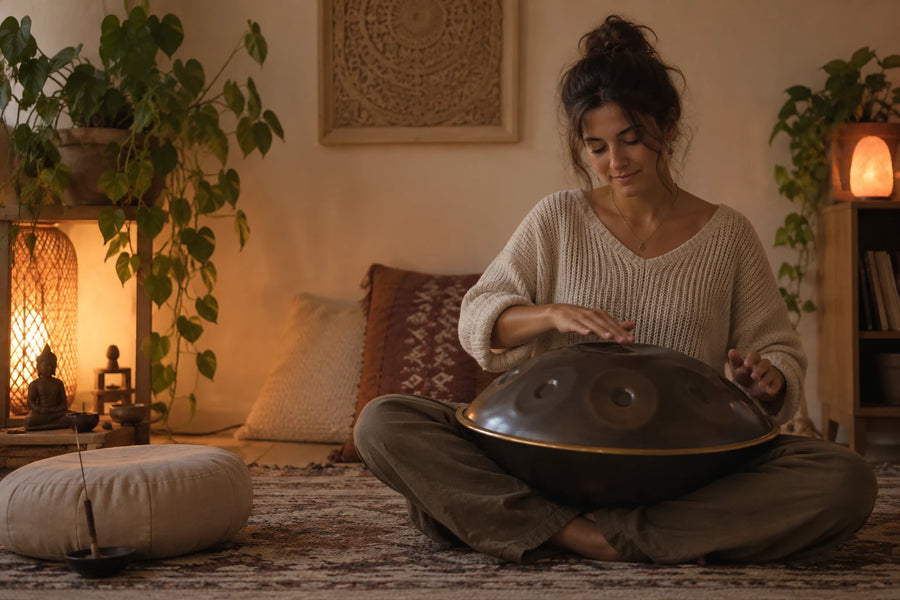
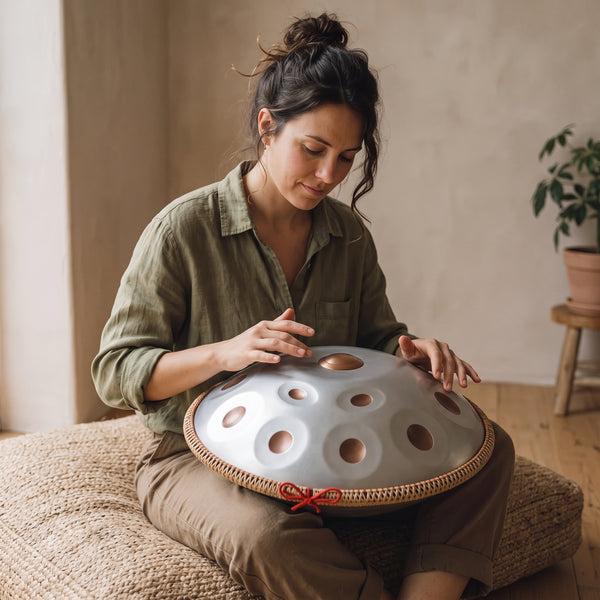
There are no wrong notes on a handpan, and you don't need sheet music or any experience. One note, and your racing thoughts begin to slow.
Overall rating: 4.6 / 5 from 37 reviews.
Ich spiele nach dem Aufwachen ein paar Minuten und starte mit mehr Schwung in den Tag.

Ich lerne, nach jeder Note zu warten, statt jeden freien Raum zu füllen. Endlich können meine Improvisationen atmen.

Ein Freund, der schon lange spielt, kam vorbei, um meine Handpan auszuprobieren. Ich hatte Angst vor seinem Urteil. Stattdessen nahm er sich Zeit, meinen ersten Motiven zuzuhören. Seine Tipps lockerten meine Hände sofort. Am Ende des Abends hatte ich richtig Lust, Fortschritte zu machen.

Bei meinem ersten Duett hörte ich vor allem dem anderen Musiker zu. Durch diese Zurückhaltung waren meine Einsätze viel stimmiger.

Meine keltische Tonleiter begleitet mich gut durch langsame Sessions. Von ihrer Atmosphäre lasse ich mich leicht führen.
Meine Kurd-Skala ermutigt mich, meine gewohnten Loops zu verlassen. Seit ich darauf spiele, erfinde ich mehr Neues.
Mit meinen zehn Noten finde ich eine Balance, die meine Improvisationen bereichert.
Für eine klare Ansprache muss ich viel zu präzise anschlagen, wodurch meine Sessions anstrengend werden. Auch nach mehreren Wochen bin ich von dieser fehlenden Leichtigkeit wirklich enttäuscht.
Ich bin wirklich glücklich.
Für einige Anschläge suche ich noch nach der richtigen Handposition. Wenn sich meine Hände verschieben, tritt eine Note weniger klar hervor. Dann spiele ich die Passage in reduziertem Tempo erneut. Diese Methode funktioniert, verlangt aber Geduld. Insgesamt gefällt es mir gut genug, um weiterzumachen.
Seit Langem bewahrte ich eine Melodie in einem Notizbuch auf. Mit meiner keltischen Tonleiter bekam sie eine sanftere Klangfarbe, als ich sie in Erinnerung hatte. Ich vereinfachte den Refrain, damit die Noten nachklingen konnten. Danach nahm ich eine Version mit dem Handy auf. Durch diese Bearbeitung habe ich mich mit einer alten Idee versöhnt.
Bei einem musikalischen Treffen durfte jeder mit meinen zwölf Noten ein Motiv vorschlagen. Anschließend verband ich sie in der Reihenfolge, in der sie entstanden waren. Das Ergebnis hatte etwas Gemeinschaftliches, obwohl nichts vorbereitet war. Wir wiederholten die Übung und änderten nur das Tempo. Ich ging mit einer kreativen Methode nach Hause, die ich wieder nutzen werde.
Bei langsamen Tempi finde ich leicht eine schöne Atmosphäre. Sobald ich schneller werde, klingen mehrere Anschläge hart und mein Spiel verliert seine Natürlichkeit. Um wieder Freude daran zu haben, muss ich langsamer werden. Diese Grenze hält mich nicht vom Üben ab. Sie schränkt aber die Stilrichtungen ein, an die ich mich herantraue.
Ich improvisiere in jeder noch so kleinen Pause.
Meine keltische Tonleiter inspiriert mich zu Melodien, die wie kleine Geschichten klingen.
Auf meiner Kurd-Skala verschiebe ich gern die Betonung, ohne den Puls zu unterbrechen.
Nach mehreren Tagen unterwegs fand ich mein Instrument wie einen vertrauten Anker wieder. Zwei Minuten genügten, damit ich mich zu Hause fühlte.
Im Haus spiele ich mit kleineren Bewegungen, um eine sanfte Atmosphäre zu bewahren. Manchmal geht dabei etwas Präsenz verloren, aber das Ergebnis bleibt musikalisch.
Mit meinen zehn Noten bin ich zufrieden, auch wenn manche Passagen meine volle Aufmerksamkeit erfordern.
Meine zwölf Noten bieten viele Möglichkeiten, doch manchmal verliere ich die Orientierung. Ein einfaches Motiv hilft mir dann, zurückzufinden, ohne die Session zu unterbrechen.
Auf meinen Aufnahmen zu Hause kommt meine Kurd-Skala mit schöner Tiefe zur Geltung. Selbst die kleinen Unvollkommenheiten meines Spiels lasse ich stehen.
Ich bin sehr stolz darauf.
Ich brauche ein paar Minuten, um meine Präzision wiederzufinden, danach spielt es sich angenehm.
Manche Tonfolgen empfinde ich als sehr ausdrucksstark, andere klingen für mein Ohr eher flach. Ich suche weiter nach meiner eigenen Sprache, an manchen Tagen mit überzeugenden Ergebnissen, an anderen mit weniger Inspiration.
Wenn ich den richtigen Schwung finde, scheinen sich meine Hände wie von selbst zu bewegen. Dieses Gefühl macht meine Sessions sehr fröhlich.
Bei einem intimen Konzert erklärte ich mich bereit, drei Minuten zu spielen. Die Sekunden vor dem Beginn kamen mir endlos vor. Sobald der erste Ton erklang, fand ich meinen Atem wieder. Das Publikum lauschte in gespannter Stille. Aus dieser Erfahrung ging ich mit mehr Selbstvertrauen hervor.
Die größten Fortschritte mache ich, wenn ich meine eigenen Aufnahmen anhöre. Inzwischen höre ich Spannungen in meinen Bewegungen, die mir beim Spielen gar nicht aufgefallen sind.
Bei einem Aufenthalt in den Bergen spielte ich vor einem großen Fenster. Langsam folgte ich den Bewegungen der Wolken. Der Raum warf ein leichtes Echo zurück, das meine Phrasen verlängerte. Ich wollte keine Aufnahme machen. Ich wollte einfach in diesem Moment bleiben.
Meine zehn Noten geben mir genug Spielraum für Abwechslung, ohne dass ich die Orientierung verliere.
In einem gemeinnützigen Studio hörte ich mein Spiel zum ersten Mal über gute Mikrofone. Die Pausen schienen beinahe ebenso wichtig wie die Noten. Ich nahm mehrere Takes auf und vereinfachte dabei jedes Mal den Rhythmus. Der letzte ist am reduziertesten. Und er passt auch am besten zu mir.
Für meine Nichte habe ich ein kleines Wiegenlied komponiert. Wenn sie zu Besuch kommt, spiele ich es ihr leise vor.
In einem Park mischt sich meine keltische Tonleiter schön mit den Geräuschen der Umgebung. Ich muss nur einen ruhigen Platz finden, um die Nuancen zu hören.
Ich kehre immer zu dem tiefen Ton zurück, der mich schon beim ersten Anschlag berührt.
Nach einer intensiven Probe merke ich, wie meine Konzentration nachlässt. Meine Anschläge werden dann weniger klar. Eine kurze Pause genügt meist, damit das Spielen wieder Freude macht. Ich hätte diese Leichtigkeit gern länger beibehalten. Mit dem Klang meiner üblichen Sessions bin ich dennoch zufrieden.
Mit meinen neun Tönen finde ich schnell eine stimmige Linie, wünsche mir aber manchmal etwas mehr Spielraum. Das gleiche ich aus, indem ich den Rhythmus stärker variiere.
Seit mehreren Wochen entwickle ich ein längeres Stück. Jede Session fügt einen neuen Abschnitt hinzu, ohne die ursprüngliche Idee zu verdrängen.
Mit meinen zwölf Noten kann ich ein Motiv weiterentwickeln, ohne mich im Kreis zu drehen.
 Bestseller−30%
 Bestseller−30%
 Bestseller−30%
 Bestseller−20%
 −30%
 Bestseller−25%

Customer service · Resonance